As goes Google, so goes the rest of the universe -- or at least that's the fear this week after the start up-turned-giant-turned-common verb reported disappointing earnings that sent the Silicon Valley stock over a digital cliff after-hours Thursday.
The company pulled in 1.84 billion dollars for the quarter or $5.71 per share, less than analysts' average projection of $6.52 per share.
Taking the blame for the disappointing figures are Europe's lackluster economic situation -- Google does a significant chunk of its business in the Euro zone -- and a recent ramp-up in hiring that bumped up total expenses.
But lurking below the surface here are worries about the Adwords Economic Indicator -- you saw the phrase coined here first, folks -- which could be telling us that retailers aren't buying as much online advertising as they should be, and, more importantly, indirectly telling us the economy is still pretty crappy.
Of course we should point out that Google, the company, its ad sales and those vital pay-per-clicks that underwrite its googol of tentacles forever invading the information universe, are all actually on the upswing.
"(Google saw) solid growth in our core business and very strong growth in our emerging businesses drove 24% revenue growth year over year," said CEO Eric Schmidt. "We saw strength in every major product area, as more and more traditional brand advertisers embraced search advertising and as large advertisers increasingly ran integrated campaigns across search, display, and mobile."
To translate the important part of that - the company's paid clicks in the U.S. are up 15 percent from last summer, but dropped a few percentage points over last quarter, which could mean a slowing of the already painfully slow economic recovery.
That was enough of a fear pill to send investors making some clicks of their own - on the 'sell' button. Shortly after the market closed Thursday and the earnings were announced, Google's share price quickly dropped over four percent in after market trading.
While Google's disappointing quarter could be reason for larger economic concern, there is hope in other recent numbers from another major search player. Microsoft has seen significant growth in both total share of the search market and ad sales tied to its Bing engine, with a year-over-year increase of 56 percent in ad spend.
Roughly translated, that's about a six percent bump for total U-S ad spend, so Google's earnings doom may not quite herald a double dip recession, but they certainly aren't lighting up the end of this long economic tunnel either.
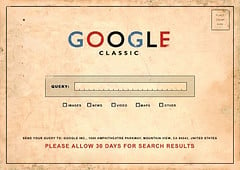
Image by dullhunk on Flickr. Used under Creative Commons License.