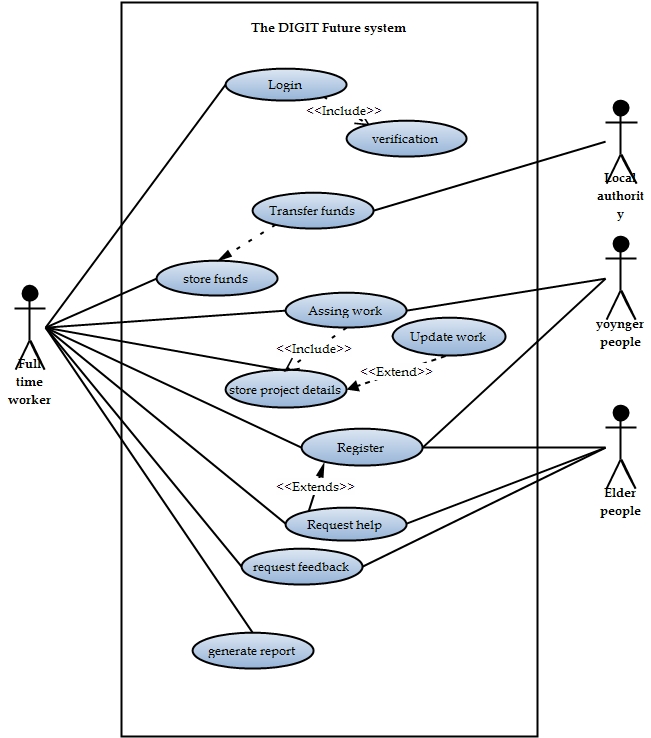
Diggit, is funded by the local authority in the Greenwich area. The project is to take young people who are seen at risk of offending and involve them in helping to look after the gardens of the elderly. A young person can be referred to the project from a number of different sources. Typically these would be by a school, the youth offending service, the police, or youth clubs. Elderly people with a need for help with their gardens are referred to Diggit also from a number of different sources, e.g. the local authority or a charities working with the elderly.
When a young person is referred a file is opened for that young person and personal details recorded along with details about the referral (why the young person has been referred, who has referred them, any supporting information). At the end of each gardening visit, notes about the young person’s contribution to the project are recorded. If a young person leaves the project then a final assessment of their contribution and progress is entered into the file.
When an elderly person is referred a file is opened in a similar way. Again, personal details about the elderly person a recorded together with details about the referral and about the type of gardening work they require. At the end of each gardening visit, notes about any issues raised by the elderly person or problems with the work undertaken are recorded. Once very month the elderly person is asked to comment on the service they have received by completing a short questionnaire and this is recorded in their file.
There is one full time worker managing the project and 10 volunteers. There are about 30 young people involved in the project at any one time. The young people are arranged in groups of three or four and each group is led by one of the volunteers. The young people are assigned to working with one volunteer as they join the project. Tim, the full time worker for Diggit, works out a rota of volunteers (they normally give up one morning or afternoon to working on the project) and matches the groups to the requests for working in people’s gardens. After a group has worked in someone’s garden, Tim will phone or call round to the person to make sure they are happy. Diggit now have quite a long list elderly people who have their gardens looked after by the project.
The local authority see this as a successful project and are considering investing more money into to allow the employment of another full time worker and providing some more gardening equipment and a van to transport equipment around. However, they want to see data about how the project is running.
](/attachments/small/4/ead60fc4921b0cd9a962d405b6cf0f74.jpg "align-left")](/attachments/small/4/ead60fc4921b0cd9a962d405b6cf0f74.jpg "align-left")](https://static.daniweb.com/attachments/4/ead60fc4921b0cd9a962d405b6cf0f74.jpg "align-left")